

 Romeo and Juliet: Déjà Vu, December 6 at 7:00 PM, Call: (818) 265-0506
 Christmas Bazaar with Santa Claus November 15 , Call: (310) 746-6181
Hakob Manandian
Wednesday, November 4, 2026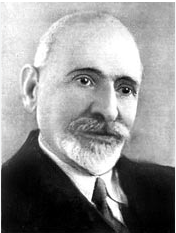
Hakob Manandyan was born on November 22, 1873, in Akhaltskha (currant Georgia). He was the first child of his parents, Hamazasp and Anna Manandyan, and had a younger sister, Astghik, and a brother, Arsen. Hamazasp Manandyan was the Head of Forest Management and belonged to the noble class.
Hakob Manandyan received his primary education at the Karapetyan School in his hometown. From 1883 to 1893, he continued his education at the First Gymnasium of Tiflis, where he was one of the best students. Then, aiming for higher education, he went to Germany and studied at the Faculty of Philosophy of the University of Jena, while simultaneously attending Oriental and Linguistic courses in Leipzig and Strasbourg (1893-1897). His teachers were prominent orientalists and linguists of the time, such as Heinrich Hübschmann, Berthold Delbrück, Eduard Sievers, Otto Schrader, Karl Brugmann and other scientists. Some of these scholars represented the prevailing trend in comparative linguistics of that era – Neogrammarian hypothesis. The German scientific approach, adopted during his student years, later influenced Manandyan's work.
Throughout his educational years, H. Manandyan extensively studied the works of ancient and contemporary authors. His writings on the works of Aristotle, F. Bacon, Sh. Montesquieu, J. Rousseau, I. Kant, Hegel, Ch. Darwin, and others’ works during his student years are of great interest.
In the summer of 1897 H. Manandyan completed the graduation program of the university by defending his dissertation in Jena, which had a philological bent and was dedicated to the study of Movses Kaghankatvatsi's "The History of the World of Aghvank". With the defense of this topic, he got the degree of Doctor of Philosophy[3]. His official opponents were B. Delbrück and H. Gelzer, whose recommendations led to the publication of Manandyan's work in Leipzig the same year.
To deepen the knowledge he gained in Germany, Manandyan decided to also graduate from the Faculty of Oriental Languages at Saint Petersburg University. In 1898, he took exams externally in Persian Philology, Language, and History, and received a first-class diploma. To study at the aforementioned universities, H. Manandyan, like other renowned Armenian scientists, received a scholarship from philanthropist Alexander Mantashyan.
Thus, H. Manandyan received a broad and thorough education and mastered numerous ancient and modern languages, including Russian, German, French, English, Greek, Ancient Greek, Latin, Persian, Sanskrit, as well as Assyrian, Parthian, Hebrew, and of course, Grabar - Classical Armenian, which he valued above all.
From 1898 to 1899, Manandyan spent time in London, Paris, Berlin, and Vienna to enrich his scientific knowledge by visiting libraries and museums. Afterward, he returned to his homeland with his deep and multifaceted knowledge. The scientific field in Armenia was not yet developed at that time.
Receiving an invitation from the administration of the Gevorkian Theological Seminary, H. Manandyan moved to Echmiadzin at the end of 1899, where he worked until 1905.
At the Seminary, he taught Greek, German, Greek literature, the history of Greek philosophy, and English Literature to the upper grades and the lecture division. In those years, Manandyan grew close to members of the monastic brotherhood such as G. Ter-Mkrtchyan, Hr. Acharian, S. Tigranian, Komitas, and other Armenian companions who taught at the Seminary.
In addition to teaching, Manandyan actively participated in the life of the Seminary. He organized various events, concerts, and thanks to his efforts, a theater group was created in the Seminary, the director of which was himself. At the Seminary, he gained the position of a leading teacher, enjoying the reverence of both the teaching staff and the seminarians.
During his years in Echmiadzin, H. Manandyan also managed to engage in scientific work, studying the spiritual and historical manuscripts of the Echmiadzin's Matenadaran (now the Matenadaran named after Mesrop Mashtots). In 1901, together with Professor F. Fink and E. Gyanjezyan, he founded the Armenological magazine "Zeitshchrift für armenische Philologie," published in Armenian and German. About its purpose, Manandyan stated, "With this journal, we aim to acquaint European scientists with Armenia's precious materials, describing the living dialects, and publishing manuscripts that are still unprocessed and unstudied."
Thanks to H. Manandyan, the journal published the scientific studies of N. Adontz, A. Abeghyan, Hr. Acharian, and others. H. Manandyan himself also published his scientific articles in the journal. The journal was published in Marburg, Germany, but due to financial difficulties, it lasted only two years.
By the order of the Catholicos of All Armenians, in January 1902, H. Manandyan, along with S. Tigranyan, was appointed as assistant editor of the journal "Ararat" – the official publication of the Mother See.
In addition to his prolific teaching and scientific activities, Manandyan's years at the seminary were marked by his meeting and marrying Varvara /Varya/ Tovmasi Khandamiryan. She was a teacher and descended from the noble Khandamiryan family of Shushi /Artsakh/.
The esteemed Armenian poet Hovhannes Tumanyan, who was close to both Varvara and Hakob, wrote in a letter to his wife in the summer of 1904 that H. Manandyan was constantly around Varya. In a subsequent letter, he mentioned that Hakob had proposed to Varya and she had accepted.
The wedding of Hakob and Varvara Manandyans took place in the grand hall of the Gevorkian Seminary. The ceremony was graced by the presence of Armenian Patriarch Khrimyan Hayrik, who blessed the newlyweds. The banquet was presided over by Hovhannes Tumanyan, and the musical program was conducted by Komitas. The wedding was attended by lecturers from the seminary, and guests from Yerevan, Tbilisi, Baku, Moscow, and Akhaltskha.
The Manandyans had one daughter, Eleonora Manandyan (1907-1987), who became a renowned psychiatrist and was honored with the title of Honored Doctor of the ArmSSR. Hakob Manandyan fondly remembered his time in Echmiadzin, where he could peacefully pursue his chosen field, engage in scientific work, write, and immediately publish his works. Unfortunately, in the spring of 1905, due to Turkish attacks on Armenians, the scientific group in Echmiadzin began to disband. As a result, H. Manandyan relocated with his family to the Armenian quarter of Tbilisi, where his wife's family and relatives also resided. In Tbilisi, the distinguished scientist was perhaps deprived of the opportunity for extensive scientific activity.
Publicistic and Legal Activities
Until 1907, H. Manandyan worked as a lecturer of Armenian, German, and Armenian Literary studies in the first and second Armenian male gymnasiums in Tbilisi. He also taught at Nersisian Armenian Apostolic Seminary in Tbilisi. Later, about his teaching years, in one of his letters sent to P. V. Gitulyanov in 1911, H. Manandyan wrote: "It turns out, that science and scientific activity in the Caucasus are at a low cultural level, and our profession is impermissible luxury, that's why I had to take up teaching".
H. Manandyan continued his publicist activities by collaborating with the 'Arshaluys' daily newspaper in Tbilisi, and from March 1906, he became its temporary editor /Acting/. During those years, he published a series of articles, criticizing the policy of the Imperial Government, arbitrary violence and tyranny, imprisonments, oppression especially towards the small nations of the Empire. He passionately lamented the nation's lack of freedom, stating in his "Why oppressed nations tend towards nationalist directions" article: "The national dignity of the Armenian people is being insulted and ignored, their right to national self-determination is taunted and jeered, and even their existence threatened. Armenians want to get rid of the nightmare of national persecution, they want to breathe freely as a nation and move forward on the path of national independent development."
However, public speaking and teaching activities did not provide enough financial means to support the family, so he decided to acquire a profession of lawyer.
In 1909, he again passed exams as an extern at the University of Tartu (Dorpat), receiving a first-class diploma of Attorney-at-Law, after which he assumed the corresponding position in Baku, which at that time was mostly inhabited by Armenians and Armenian nobility. Alongside his practice of law, Manandyan taught at Baku People's University from 1911 to 1913, and later at a local trade school from 1915 to 1919. In 1917 H. Manandyan worked in the Armenian magazine "Gorts" published in Baku, where he published a number of remarkable articles on the ideas of national self-consciousness and national self-determination, emphasizing that the nation, being a historical living force, "fights against all the obstacles that hinder its free existence". He also offered pathways on how to implement national self-determination concepts. "Armenians, who have exerted all its efforts to safeguard its physical existence, should never forget that the protection of their spiritual essence is no less important for national self-assertion, and that tens of thousands of denationalizing Armenians who despise and disrespect their language and culture are more dangerous for its national existence and development than the external enemy", Manandyan wrote in his article.
Despite the active public life and busyness, H. Manandyan tried to find time to do science as well. "I entirely devoted my free hours to the Armenological works that I had started in Etchmiadzin, specifically to the study of the Hellenophilic works in our bibliography" Manandyan wrote. Nevertheless, later he was honest with his brother that he regretted almost 15 years following the Seminary period, that he did not have enough opportunities to engage in science, which he considered a great loss for Armenian bibliography.
Years Dedicated to Science and the Development of Armenia
In 1919, H. Manandyan returned to Armenia permanently and actively participated in the founding of the first university. After that, he dedicated his life to the newly established Yerevan State University and Armenian students. In 1931, Manandyan stopped teaching at the university and devoted himself to scientific research.
In 1926, H. Manandyan was awarded the title of professor, and in 1935, the title of Honored Scientist of the USSR. For many years, he was the Scientific Secretary of the Institute of Science and Art of Armenia. In 1939, he became the first and only representative of Armenia elected as a full member of the USSR Academy of Sciences in the field of history, and in 1943, he was confirmed as one of the first members of the Armenian SSR Academy of Sciences. From 1939 to 1946, he was elected as a deputy of the Yerevan City Council of Workers' Deputies. He was a member of many scientific commissions, supervised the candidate and research work of young historians. On the occasion of his 75th birthday, he was awarded the Order of the Red Banner of Labour.
Academician H. Manandyan died on February 4, 1952, at the age of 79. In recognition of his immense contribution to the establishment and development of the Yerevan State University, Manandyan was buried in the courtyard of his beloved University. In 2001, by decision of the Government of the Republic of Armenia, the remains of the renowned Armenian were moved to the Komitas Pantheon.
On December 21, 1973, a scientific session of Yerevan State University and the Institute of History, dedicated to the 100th anniversary of Manandyan's birth, was held at the Academy of Sciences of the Armenian SSR. A street in the Shengavit administrative district of Yerevan is also named after the great historian.
In 1937, one of the buildings of Yerevan was built - the house of specialists on Teryan Street, where H. Manandyan was provided with an apartment, and he lived in it for the rest of his life. To this day, there is a memorial stone dedicated to him at the entrance to the building. Currently, the great-granddaughter and sole heir of the scientist, Spiritual Teacher and public figure Eleonora Manandyan, lives in this house with her mother Satenik and daughter Tarieyl.
The University in Manandyan's Life
From the very foundation of the University, H. Manandyan lived with a mission that was the cornerstone of the university's creation – the revival of the devastated Armenia and the suffering Armenian people.
The Foundation of the University
After the declaration of the First Republic of Armenia, despite ongoing wars, famine, and epidemics, the Armenian intellectuals clearly recognized the need for a national university. Although in Soviet-Armenian historiography the establishment of Yerevan University is presented as an achievement of the Soviet regime, in reality, the national university was already functioning successfully before Armenia was sovietized.
On May 16, 1919, the law “On the Opening of a University in Armenia,” adopted by the Council of Ministers of the First Republic of Armenia, considered the establishment of a university in Yerevan with four faculties: historical-linguistic, economic-legal, medical, and physical-mathematical – with a technical department. Professor Yuri Ghambaryan was appointed as the University Inspector. Due to the lack of conditions for construction in Yerevan, the University was temporarily relocated to Alexandrapol (Gyumri).
In a short time, in Alexandrapol were gathered Armenian intellectuals who had studied at leading universities around the world, dedicating themselves tirelessly to the mission of educating the younger generation. Among them were Hakob Manandyan, Nicholas Adontz, Joseph Orbeli, Alexander Tamanyan, Manuk Abeghyan, Hrachia Acharian, as well as prominent foreign Armenologists Nikolai Marr, Antoine Meillet, and Josef Markwart.
On March 8, 1920, when the classes had just started, H. Manandyan requested to be appointed as a lecturer to teach "the Greek period and language of ancient Armenian bibliography, as well as the history of the development of the Armenian culture." In a letter dated June 12, 1920, he was informed that he had been chosen as the acting dean of the faculty and was offered to begin his duties.
As newspapers of that time wrote, the university was expected to serve as a bright cresset illuminating the path for the Armenian people. It is not surprising that, in those difficult conditions, when even the physical existence of the Armenian nation was in question, when the country was filled with refugees and the wounds of the Armenian Genocide were still bleeding, Armenians were thinking about science and culture. "A handful of Armenians, subjected to the torment of endless bloodshed and suffering, with a fervent impulse of heart and soul, aspired to the beautiful, to the fine arts and enlightened science," wrote the daily newspaper ‘Narod’ in its February 1920 issue.
On June 21, 1920, the Council of Ministers of the Armenian Republic decided to return the university to Yerevan, allocating the building of the educational seminary. Classes were to resume in early October, but due to the tense military situation, they were postponed despite the students' demands to continue.
After the establishment of Soviet rule in Armenia, Yerevan University was reorganized with the active participation of H. Manandyan. According to the first decree of Ashot Oganesyan, the first People's Commissar of Education of the Armenian SSR, signed on December 17, 1920 ("On the Reorganization of Yerevan University"), "Yerevan University was renamed Yerevan People's University, the faculties of the former university were closed, and two new faculties were created: the Faculty of Natural Sciences and the Faculty of Social Sciences." On January 2, 1921, the university council, through a secret vote, elected H. Manandyan as the rector, making him the first elected rector of the university.
The inauguration ceremony of Yerevan People's University took place on January 23, 1921, in the Shaumyan Workers' Club hall. During the event, Rector Manandyan emphasized the role of the university in the life of the Armenian people. "The Armenian Highlands were deprived of higher educational institutions, Armenian intellectuals acted and worked outside the country, and now they must return to Armenia to serve the scientific needs of the suffered working people. The educational council of the People's University widely opens the doors of this institution to those striving for science and hopes that together with the students, through joint efforts, they can build and develop this high and unique educational institution in Armenia," said H. Manandyan.
On October 23, 1923, Yerevan People's University was renamed the State University of the Armenian SSR. In 1930, on the basis of the technical, economic, medical, and pedagogical faculties of Alma Mater YSU, engineering-technical, trade-cooperative, medical, and pedagogical institutes were established, respectively. Thus, the higher education system of Armenia was formed on the basis of Yerevan State University.
Life Within the Walls of the University
The heart of the great patriot was constantly pained by the suffering of his people, and under these circumstances, the university and the students seeking education became his hope and solace. His love for the university and dedication to the mission of education were vividly reflected in the letters he sent to his beloved wife Varya and daughter Eleonora, who was studying in Petersburg. These letters reveal how dire the economic situation in Armenia was, especially in the early years of Soviet rule, affecting also scientists like Manandyan. Despite this, he wrote to his wife that all the money he received was sent to them and that he had no extra expenses because he "lived within the four walls of the university." This last phrase was literally true, as in the early 1920s, Manandyan lived with his mother, sister, and brother on the second floor of the university building. In a letter dated October 19, 1920, Manandyan wrote to his wife that his room had nothing but a sofa, "but these problems are now more than secondary."
H. Manandyan held the position of rector until October 1921, after which he led the Faculty of Oriental Studies (later known as Historiography) until October 1923.
In 1921, in a letter addressed to his wife and daughter, Manandyan mentioned his pessimism about the Faculty of Oriental Studies attracting a sufficient number of students, but he was mistaken. From the first period of the university's reopening, his faculty already had 50-60 students, and from subsequent letters, it is clear that this number reached 600 within a year. As Manandyan joyfully noted in one of his letters to his daughter, students came to Yerevan University from Baku, Tiflis, Gandzak, Rostov, and Iran because, according to the students, the lessons were "more serious" here. Nevertheless, professors at Yerevan University were paid three times less than their counterparts in Baku and Tiflis.
"Famine has begun on all sides; apparently, the government has neither money nor sufficient food supplies. It is difficult to predict what will happen next with our country," Manandyan wrote to his wife Varya, and then shifted to expressing enthusiasm for the university, "My only consolation here is this work of mine, which is successfully being realized."
In the harshest conditions of crisis, the existence of the university could only be maintained through the self-sacrifice of the Armenian intelligentsia. At the same time, students' desire for education was immense. During lectures, the classrooms were full, and sometimes students asked professors to practice with them even on weekends.
"Day by day, I see how a magnificent work and new intellectual forces are being created for this unfortunate country," Manandyan wrote, living solely for the idea of the university and considering it the "only direct path to the revival" of Armenia. Speaking about other professors, Manandyan noted that each of them was a martyr who sacrificed their personal life for the people. It was at the invitation of H. Manandyan that Kostan Zarian, Melik Oհanjanian, and others taught at the Historiography Faculty. He continuously wrote letters and invited the best specialists to engage in educational work.
Thanks to Manandyan's lectures, students at the faculty became aware of the importance of the Armenian language and studied Old Armenian Language - Grabar, since, according to the academician, only Grabar allows one to capture the subtle beauty and richness of the Armenian language. He also regularly took students on archaeological expeditions to uncover ancient Armenian capitals (surely, only on foot).
The renowned scholar also placed great importance on music. Through his efforts, a university student choir and orchestra were established. In one of his letters addressed to his daughter, he also urged Eleonora Manandyan not to neglect music—piano lessons, otherwise she would later regret it, as he did himself. “The Armenian soul is very enraged and saddened due to objective historical reasons. In my opinion, Armenians desperately need visual arts and music... It is through music and visual arts that Armenians should endure the unspoken sufferings of their past and alleviate the heavy burden of sorrow accumulated in our hearts,” Manandyan wrote.
Most of the letters addressed to his wife and daughter were dedicated to the university and the nation. These were Manandyan's reflections, for which he almost apologized to his loved ones, saying that his letters were one-sided, as his entire life was connected with the university. “Our life never had any other content or direction,” wrote Manandyan.
Resignation
In September 1923, H. Manandyan decided to step down from his position as dean. While the reason was a dispute with the department members, the true motive was his boundless passion for science and scientific work, which was being hindered by administrative duties. Meanwhile, the professor noted with great gratitude and joy that both students and faculty members had made every effort to convince him to reconsider his decision to leave the deanship. The deep respect of the students for him and his work was the greatest reward for Manandyan's arduous efforts.
After Manandyan, the Department of Historiography was headed by Manuk Abeghyan, while Manandyan continued to deliver his lectures on the history of the Armenian nation until 1931, simultaneously advancing scientific publications at the university.
"Unfortunately, our nation does not realize that it can contribute new insights even to the greatest European scholars through its university and its new generation, which, through the flames of suffering, have managed to develop new perspectives as deep as our own suffering," wrote Manandyan, carrying the pain of the nation in his heart but at the same time possessing the greatest faith in its bright future.
The bronze bust of H. Manandyan, installed in the lobby of the central building of Yerevan State University, symbolizes the role of the outstanding scholar and educator in the establishment, development, and advancement of university education and science.
Legacy
Manandyan entered the field of Armenology as a philologist. His extensive research in philology and linguistics later defined the depth and versatility of the works of this renowned historian, dedicated to the history of the Armenian people. During his fruitful scientific career, he authored more than 150 works in Armenian, Russian, German, and other languages, leaving a distinguished mark on the development of Armenian historiography.
Philological Research
Even during his years of teaching at the Gevorgyan Seminary in Echmiadzin, Manandyan devoted much time to studying the rich manuscripts of the Matenadaran, publishing notable articles and reviews in the journal “Ararat”. According to the great Armenologist, a comprehensive understanding of Armenian history is impossible without a detailed study of Ancient Armenian and foreign sources. From this perspective, the research conducted by H. Acharian and H. Manandyan on Armenian martyrological literature of the 12th-19th centuries is very significant. As a result of this work, the two-volume “Armenian Neo-martyrs” was published in 1902, followed by a comparative-analytical edition of the same collection the following year. Manandyan's primary goal in compiling this work was to identify all sources that could be used to obtain reliable information about the internal life of Armenians under Muslim rule.
During his years of teaching at the seminary, Manandyan also worked on Armenian translations of Greek philosophical works, studying Grecophile texts. The eminent scholar had his own research method. He didn't work on a single cohesive task, he initially examined separate links in the overall chain and then proceeded to contextual and comprehensive research. The result of these studies were works such as "The Problem of David the Invincible in a New Light" (1904), "Excerpts from the Chronicle of Eusebius of Caesarea in an Ancient Manuscript" (1905), "Commentary on Aristotle's Categories Presented by Elias of Alexandria" (1911), and other works, notably the monumental monograph "The Grecophile School/ Hellenizing school- Грекофильская школа and its Periods of Development" (1925), which summarizes this entire period.
Among Manandyan's philological studies, special attention is given to his research on Movses Khorenatsi and his "History," Mesrop Mashtots and the invention of writing system, presented in a number of works.
The historian always proudly emphasized that the literary heritage of the Armenians is a valuable contribution to universal culture. "The extensive historical literature of the Armenians, the richest among all historical literatures of the Near East, serves as a valuable source for studying the history not only of Armenia but also of Persia, Byzantium, Georgia, Agvan, and almost all the peoples of the Near East," Manandyan said. The truth of these words is evidenced by hundreds of works by various world scholars, which include numerous excerpts from the works and research of H. Manandyan.
Episode on Manandyan’ Unknown Side
Many researchers studying the life and work of H. Manandyan suggest that some episodes of the great scientist's life might have remained obscured. Specifically, very little is known about his student years, and it is difficult to determine what changes were made to many of his articles published during the Soviet period due to censorship practices of the time.
One of the unexplored periods of the scientist's life is revealed by a manuscript article presented by Manandyan's student, historian Petros Hovhannisyan, in 1990. This article, titled "The Influence of Buddhism," was written by Manandyan during his studies in Germany. Petros Hovhannisyan noted that, unfortunately, it was not possible to determine to whom the article was addressed or why it was not published. The manuscript is currently preserved in the collection of the Armenian Publishing House of the Caucasus named after Charents. In the mentioned article, Manandian, presenting the rapid development of science, emphasized that among the old Teachings, Buddhism in particular began to attract the attention and respect of scientists.